
Loading...
Serving Chino Hills, CA and surrounding areas. (909) 834-5289
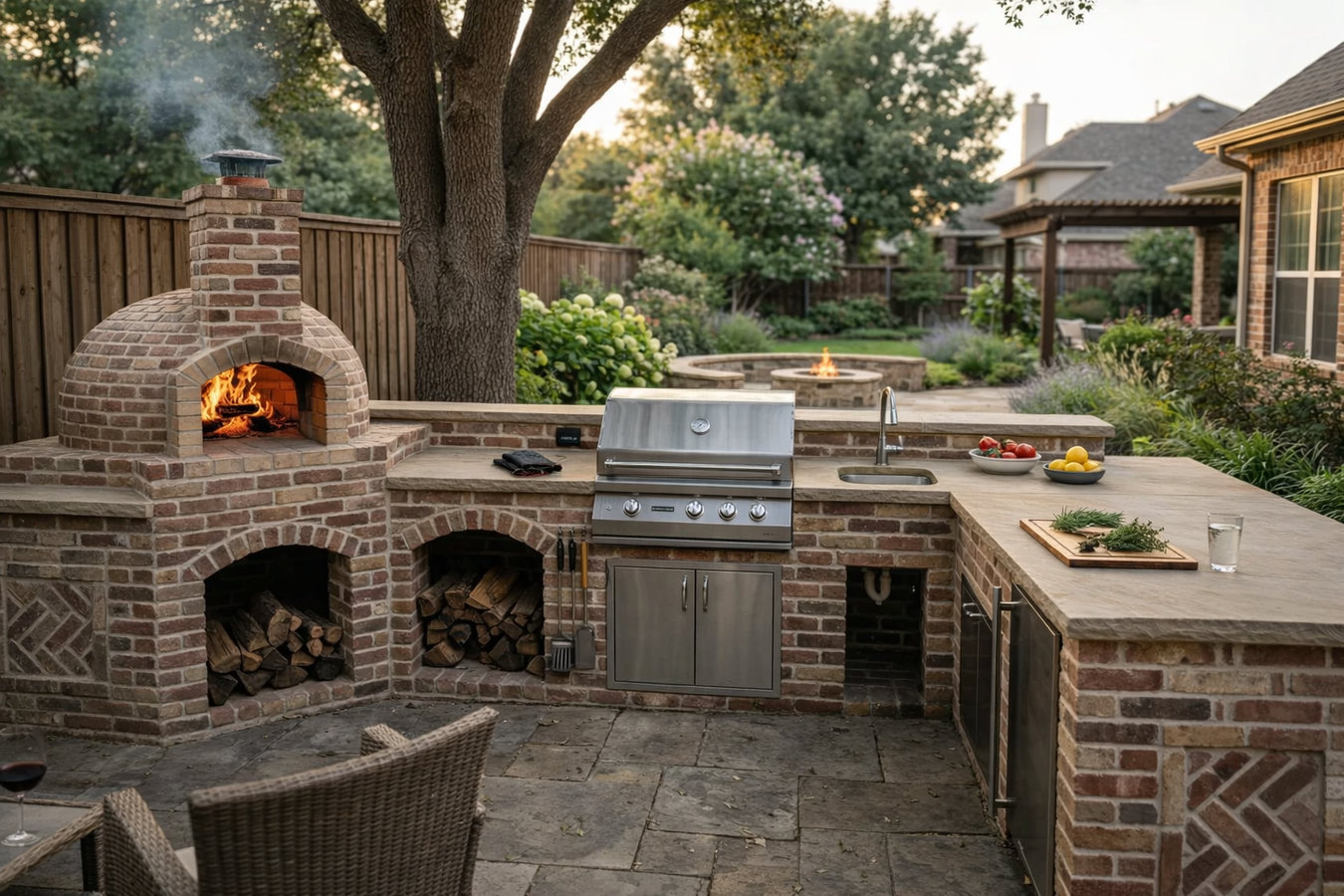
Premier Chino Hills Masonry provides masonry contractor services throughout Corona, CA, including outdoor kitchen masonry, retaining walls, driveway pavers, and brick repair. We have served the Inland Empire since 2016 and work regularly across Corona from the neighborhoods near the 91 freeway to the hillside properties along the Santa Ana Mountains - every estimate is free and in writing before any work begins.
Corona averages more than 280 sunny days a year, and the large lots on most 1990s and 2000s subdivisions here give homeowners the backyard space to actually build and use an outdoor kitchen. A proper masonry structure - concrete block frame, stone or tile veneer, built-in grill surround and countertop - outlasts any prefab metal unit and adds real value to the property. Our outdoor kitchen masonry service covers design, structure, and finish in a single project.
Many Corona properties, especially those backing up to the hillsides near the Santa Ana Mountains, sit on sloped terrain where the grade drops significantly from one side of the yard to the other. Without a properly built retaining wall, that grade change lets soil erode toward the foundation during winter rains. Corona clay soils hold water well and build up lateral pressure against wall faces - drainage needs to be engineered into every wall from the start, not added as an afterthought.
Concrete driveways installed in Corona during the 1990s building boom are now 25 to 35 years old, and the combination of clay soil movement and triple-digit summer heat has left many of them cracked, uneven, and patched multiple times. A paver system on a properly compacted base handles the seasonal soil movement better than a solid slab - individual pavers flex and can be reset if a section shifts, rather than cracking through the way a monolithic slab does.
Block wall fences run along most property lines in Corona's residential neighborhoods, and the ones built during the original subdivision development in the 1980s and 1990s are now 30 to 40 years old. Santa Ana winds that funnel through the passes near the Santa Ana Mountains can gust past 60 mph in parts of Corona, putting stress on walls that have already lost structural integrity from decades of soil movement and mortar weathering. Walls showing mid-height bowing or horizontal cracking need structural evaluation, not just patching.
The expansive clay soils throughout Corona move with every wet season and dry season, and homes built on sloped lots near the hills carry an additional risk of soil creep - slow downhill movement that gradually shifts the ground beneath a foundation. Signs that a Corona home needs foundation attention include doors that stick or gap at the top, diagonal cracks at window and door corners, and floors that feel unlevel in one part of the house but not another.
New walkway construction is one of the most common masonry requests on Corona properties where the existing concrete path has cracked from clay soil movement or settled unevenly at control joints over the years. Homes built in the 1990s typically have plain broom-finish concrete walkways that are now at the end of their service life, and replacing them with pavers or flagstone on a properly prepared base gives both a longer lifespan and a more finished look that matches the current character of the neighborhood.
Corona grew rapidly during the suburban building booms of the 1980s, 1990s, and early 2000s, which means a large share of the city's housing stock is now 25 to 40 years old - exactly the age range where original concrete flatwork, block wall fences, and masonry structures need significant maintenance or replacement. The clay-rich soils common in this part of Riverside County expand when wet and contract when dry, and that seasonal movement is the primary driver of cracked driveways, failing retaining walls, and open mortar joints throughout Corona's residential neighborhoods. Homes on sloped lots near the Santa Ana Mountains deal with an additional layer of complexity: terrain that affects drainage patterns, soil stability, and how retaining walls perform over time.
Corona sits directly in the path of Santa Ana wind events, which the National Weather Service at NWS Los Angeles tracks and forecasts for the Inland Empire each fall and winter. These winds can gust past 60 mph near the passes in the Santa Ana Mountains and regularly cause damage to fencing, roofing, and any masonry that has already lost structural integrity from years of soil movement and weather exposure. A masonry contractor who has worked in Corona understands that jobs here are not just about the immediate repair - they are about building something that holds up through the next wind event and the next wet season.
Our crew works throughout Corona regularly, and we understand the local conditions that affect masonry work here. We pull permits through the City of Corona Building Division for structural projects - outdoor kitchen structures, new retaining walls, block wall fences above permitted heights, and foundation-tied masonry all require permits in Corona, and we handle the application and inspection coordination so you are not managing that on your own.
Corona is a city that straddles two counties and two freeway corridors, and the neighborhoods feel different depending on which part of the city you are in. The 91 freeway runs east to west through the center of the city, and the established neighborhoods south of the freeway near Dos Lagos tend to have larger lots and more mature landscaping than the newer tracts to the north. Properties near the Santa Ana Mountains on the western edge of the city back up to open space and hillside terrain that creates different drainage and soil conditions than the flatter eastern parts of the city. Glen Ivy Hot Springs at the base of the mountains is a landmark most Corona residents know, and the neighborhoods closest to it are some of the hilliest in the city.
We also serve Yorba Linda to the northwest and Chino Hills to the north - both share the same clay soil challenges and Santa Ana wind exposure that Corona homeowners contend with year after year.
Call or submit a request through the contact form and we will respond within one business day to confirm the scope and schedule a visit to your Corona property. You do not need exact measurements - we take those during the site visit.
We visit the property, assess the site conditions - including drainage, slope, and soil - and provide a written estimate with all costs itemized before any work is approved. If a permit from the City of Corona Building Division is required, we include that in the estimate and explain the timeline.
We schedule Corona jobs around the permit timeline when permits are involved, and we avoid pouring concrete or setting mortar during the hottest mid-afternoon hours in summer so the material cures correctly. Most homeowners do not need to be present throughout the workday, though we ask for availability on the first day to walk through the plan together.
When the work is complete, we walk the project with you before we leave. Any questions are addressed on the spot. For permitted work, we coordinate the final inspection with the City of Corona Building Division - you are not left managing that last step on your own.
We serve all of Corona, CA - from neighborhoods near the 91 freeway and Dos Lagos to the hillside properties near the Santa Ana Mountains. Free written estimate, no obligation.
(909) 834-5289Corona is one of the larger cities in Riverside County, with a population of around 170,000 people. It sits right on the border of Riverside and Orange counties, just off the 91 freeway, making it a popular choice for families who want more space than Orange County offers at a price that makes ownership realistic. Most residents own their homes rather than rent, and the median home value has climbed significantly over the past decade as demand from buyers priced out of coastal markets continues to push values up. The city grew quickly through several suburban building booms, with the bulk of the housing stock now concentrated in single-family subdivisions built between 1980 and 2005. Corona is ringed by the Santa Ana Mountains to the west and rolling hills throughout its outer edges.
The neighborhoods in Corona vary noticeably depending on where in the city you are. South Corona, near Dos Lagos and the hills above the 15 freeway interchange, has some of the newer and larger homes, with bigger lots and more backyard space for outdoor living. The older residential streets closer to downtown have more mature landscaping and a different character than the planned subdivisions to the south and east. Nearby Yorba Linda to the northwest has a similar hillside character, while Ontario to the north is flatter and more industrial in its outer areas but has the same clay soil conditions in its residential neighborhoods.
Restore structural integrity and stop further damage with expert foundation repair.
Learn MoreFix cracks, spalling, and mortar damage to keep your chimney safe and functional.
Learn MoreBuild strong retaining walls that hold back soil and add usable outdoor space.
Learn MoreBring aged or weathered masonry back to its original appearance and strength.
Learn MoreAdd warmth and character with a custom masonry fireplace built to last.
Learn MoreUpgrade any surface with beautiful, low-maintenance stone veneer cladding.
Learn MoreConstruct solid concrete block walls for property boundaries or privacy.
Learn MoreSet a stable, level foundation block wall as the base for new construction.
Learn MoreDesign and build a durable outdoor kitchen perfect for entertaining.
Learn MoreCreate safe, beautiful walkways using brick, stone, or paver materials.
Learn MoreInstall long-lasting brick walls for fences, garden beds, or facades.
Learn MoreRe-point deteriorating mortar joints to extend the life of brick structures.
Learn MoreCall today or submit a request online and we will have a written estimate to you within one business day - no pressure, no obligation.